Check the evening schedule and food access
BAC / MONTHLY SPECIAL 03Eating well,
Eating well,
away from home
BAC MONTHLY 03 / FOOD
Convenience stores, client dinners and late meetings.
Food choices for the days you actually have.
BAC Special 03 · Editorial draft01
A route through this issue
Start at the shop: compare label units and see what makes up a meal. Then turn to late meetings, business dinners and travel.
Research findings and BAC meal-planning examples are labelled separately. The examples do not guarantee a particular nutrient intake. Start with the situation that feels familiar.
| Pages | Where to start |
|---|---|
| 03–07 | Labels and lunch shopping |
| 08–16 | Meal composition and evidence |
| 17–25 | Late work and eating out |
| 26–32 | Your circumstances, travel and sources |
BAC Special 03 · Editorial draft02
Two lunch options.
What will you compare?
Labels and lunch shopping
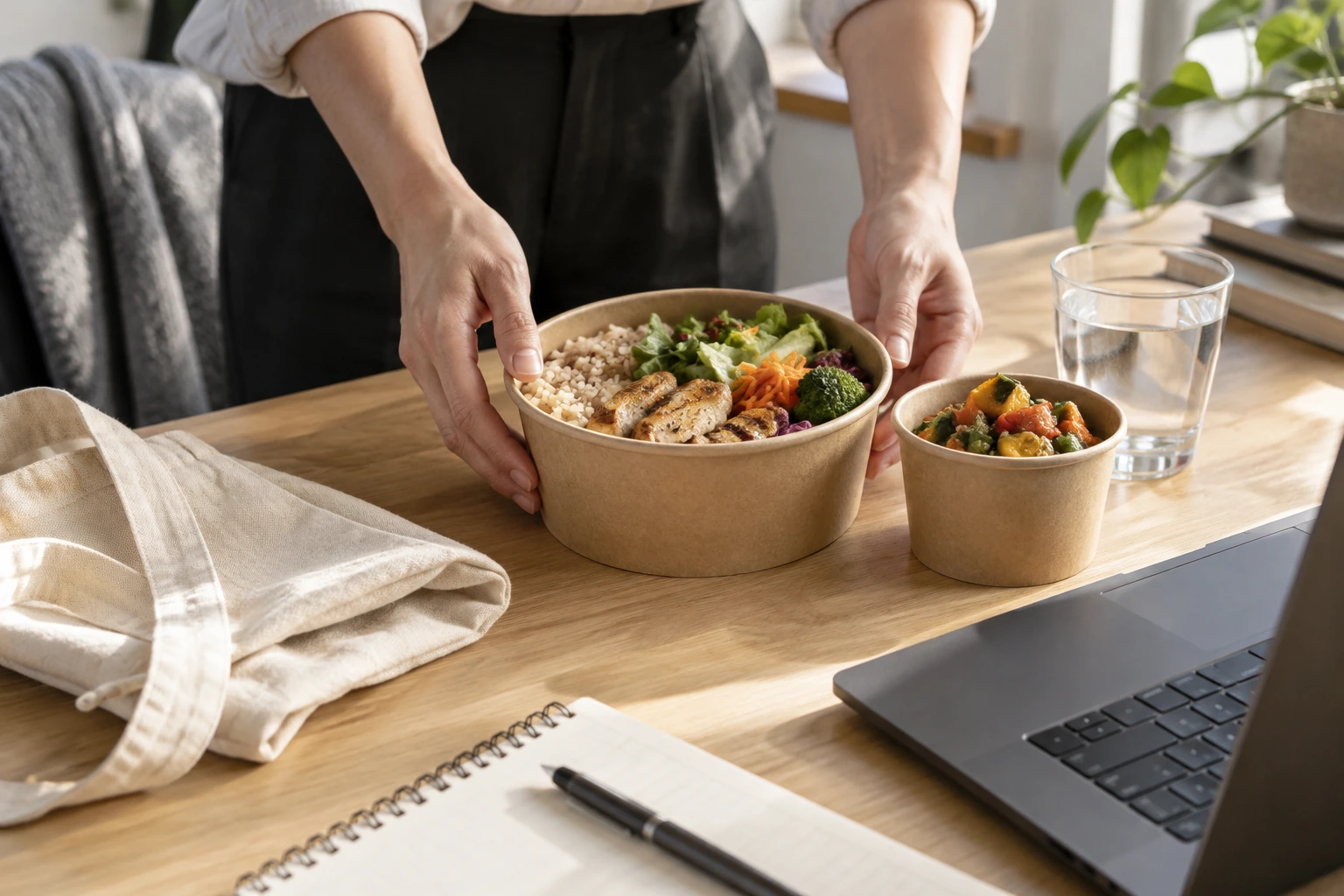
You are holding two lunch boxes. Should the lower-calorie one win automatically? First decide how much you will eat. A value per 100 g and a value per pack cannot be compared directly. Japan’s Consumer Affairs Agency explains converting the label to the amount eaten.
Then set the meal boundary. Include a soup, drink or separate dressing if you plan to have one. A reassuring product name tells you less than a clear account of what you intend to eat.
You are holding two lunch boxes. Should the lower-calorie one win automatically? First decide how much you will eat. A value per 100 g and a value per pack cannot be compared directly. Japan’s Consumer Affairs Agency explains converting the label to the amount eaten.
Then set the meal boundary. Include a soup, drink or separate dressing if you plan to have one. A reassuring product name tells you less than a clear account of what you intend to eat.
Sources: Consumer Affairs Agency
BAC Special 03 · Editorial draft03
A label-reading sequence
A label-reading sequence
You do not need to memorise the whole panel. Match the basis, portion and additional foods, then look at the nutrient relevant to today’s comparison.
You do not need to memorise the whole panel. Match the basis, portion and additional foods, then look at the nutrient relevant to today’s comparison.
- 01
Basis
Per pack, serving or 100 g?
- 02
Portion
Convert to the amount eaten
- 03
Boundary
Include drinks, soup and dressing
- 04
Purpose
Choose the nutrient to compare
- 01
Basis
Per pack, serving or 100 g?
- 02
Portion
Convert to the amount eaten
- 03
Boundary
Include drinks, soup and dressing
- 04
Purpose
Choose the nutrient to compare
An editorial sequence based on official label guidance, not a tested health intervention.
Sources: Consumer Affairs Agency
BAC Special 03 · Editorial draft04
A pack and 100 g:
make the basis match
Match the label units
Label value×amount eaten÷reference amount. Eating 200 g of a food labelled per 100 g gives twice the displayed value. This is arithmetic, not a made-up product label.
Label value×amount eaten÷reference amount. Eating 200 g of a food labelled per 100 g gives twice the displayed value. This is arithmetic, not a made-up product label.
| Label basis | Portion eaten | Value to use |
|---|---|---|
| Per 100 g | 200 g | Displayed value×2 |
| Per pack | Half a pack | Displayed value×0.5 |
| Per serving | One serving | Displayed value unchanged |
| Label basis | Portion eaten | Value to use |
|---|---|---|
| Per 100 g | 200 g | Displayed value×2 |
| Per pack | Half a pack | Displayed value×0.5 |
| Per serving | One serving | Displayed value unchanged |
Sources: Consumer Affairs Agency
BAC Special 03 · Editorial draft05
Front claims,
back-panel numbers
Front claims, back-panel numbers
“High protein” and “reduced salt” concern particular nutrients. They do not guarantee a complete meal or suitability for your circumstances.
“High protein” and “reduced salt” concern particular nutrients. They do not guarantee a complete meal or suitability for your circumstances.
| Front claim | What to check next |
|---|---|
| High protein | Protein in your portion and other foods |
| Reduced salt | Salt equivalent per portion; dressing included? |
| Zero or low | Which component? Not all components |
| A healthy-sounding name | Read the panel and ingredient list |
Sources: Consumer Affairs Agency
BAC Special 03 · Editorial draft06
Look inside the box
before adding more
Look inside before adding more
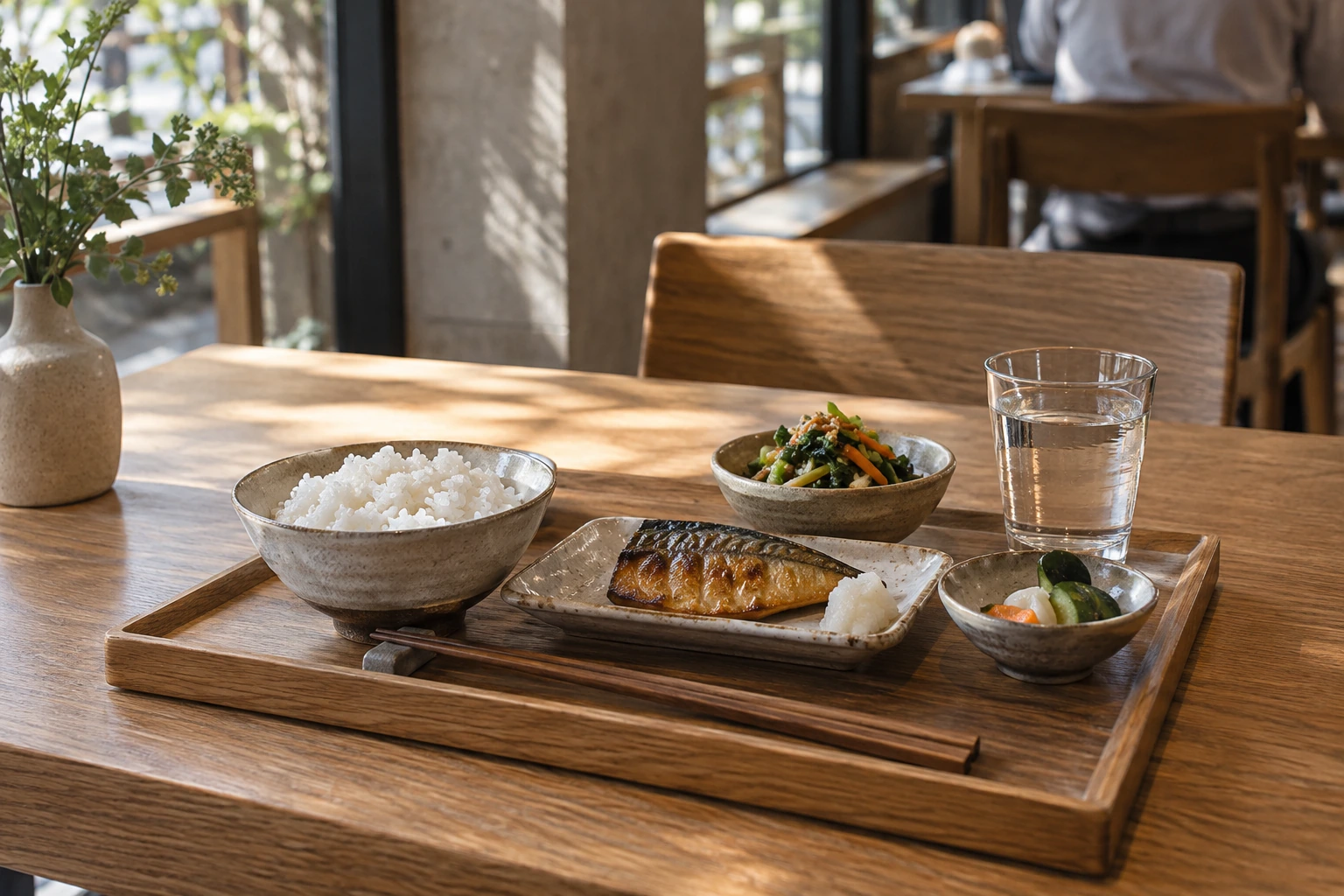
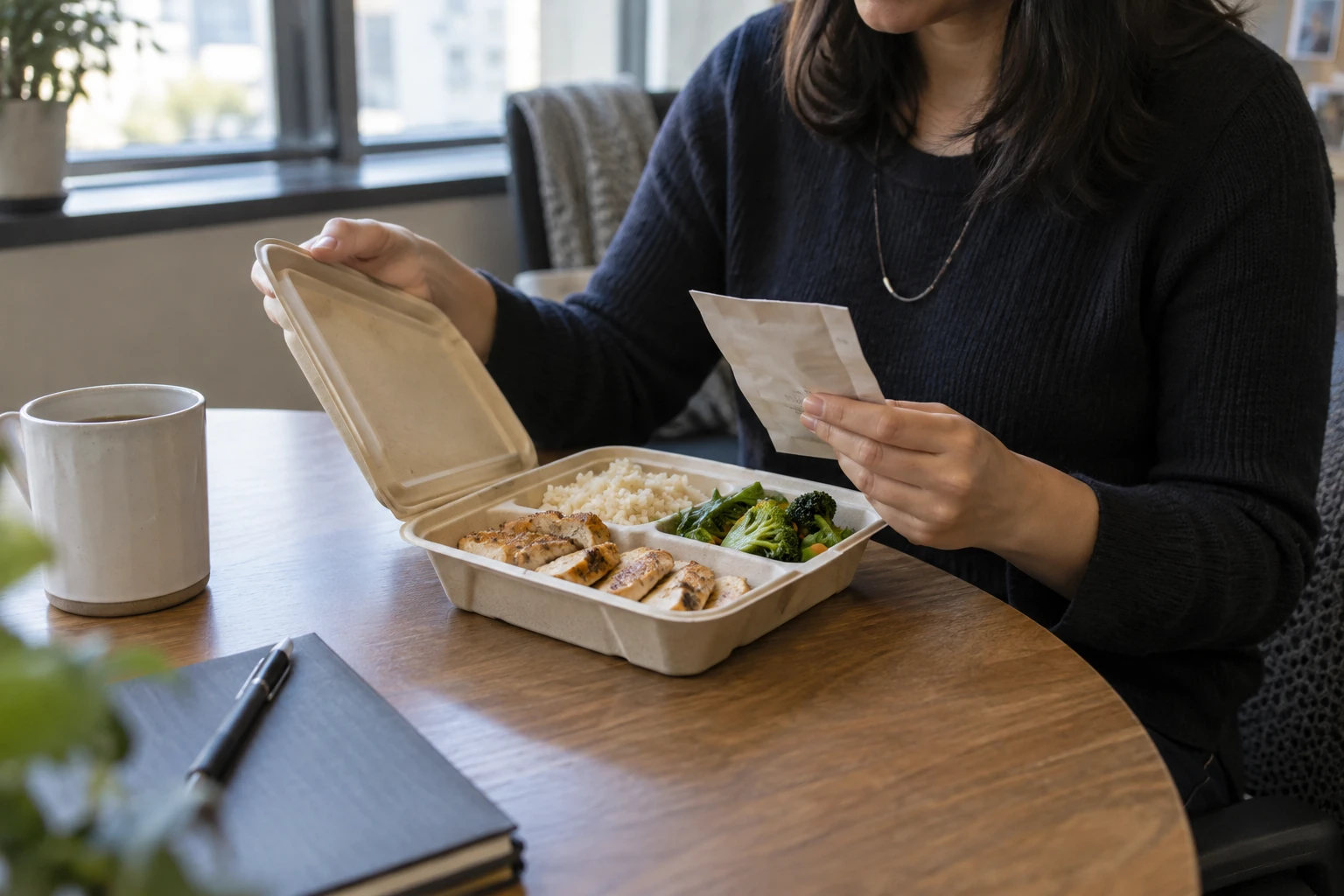
Does an extra salad improve every lunch box in the same way? Some already contain vegetable dishes; others have only a small main dish. Check the contents, panel and portion rather than relying on the picture.
BAC suggests describing one familiar lunch: a staple, a meat/fish/egg/bean dish, and vegetable dishes. Choose additions according to what is absent. If a nutrient amount is unavailable, leave it unknown instead of inventing it.
Does an extra salad improve every lunch box in the same way? Some already contain vegetable dishes; others have only a small main dish. Check the contents, panel and portion rather than relying on the picture.
BAC suggests describing one familiar lunch: a staple, a meat/fish/egg/bean dish, and vegetable dishes. Choose additions according to what is absent. If a nutrient amount is unavailable, leave it unknown instead of inventing it.
An editorial food-group check; it does not guarantee individual requirements.
Sources: WHO, 2026Consumer Affairs Agency
Read notes and sources
Two lunch options.
What will you compare?
You are holding two lunch boxes. Should the lower-calorie one win automatically? First decide how much you will eat. A value per 100 g and a value per pack cannot be compared directly. Japan’s Consumer Affairs Agency explains converting the label to the amount eaten.
Then set the meal boundary. Include a soup, drink or separate dressing if you plan to have one. A reassuring product name tells you less than a clear account of what you intend to eat.
A label-reading sequence
You do not need to memorise the whole panel. Match the basis, portion and additional foods, then look at the nutrient relevant to today’s comparison.
An editorial sequence based on official label guidance, not a tested health intervention.
A pack and 100 g:
make the basis match
Label value×amount eaten÷reference amount. Eating 200 g of a food labelled per 100 g gives twice the displayed value. This is arithmetic, not a made-up product label.
Front claims,
back-panel numbers
“High protein” and “reduced salt” concern particular nutrients. They do not guarantee a complete meal or suitability for your circumstances.
Look inside the box
before adding more
Does an extra salad improve every lunch box in the same way? Some already contain vegetable dishes; others have only a small main dish. Check the contents, panel and portion rather than relying on the picture.
BAC suggests describing one familiar lunch: a staple, a meat/fish/egg/bean dish, and vegetable dishes. Choose additions according to what is absent. If a nutrient amount is unavailable, leave it unknown instead of inventing it.
An editorial food-group check; it does not guarantee individual requirements.
BAC Special 03 · Editorial draft07
Think about the meal
before removing its staple
Meal composition and evidence
On a long workday, is removing bread or rice your only possible adjustment? WHO’s 2026 guidance describes adequacy, balance, moderation and diversity. Neither energy nor protein alone describes a whole diet.
If lunch was just a drink, check what food you can access later. Before adding another restriction, write down the current meal and the conditions of your workday. This issue does not assume every reader needs to lose weight.
On a long workday, is removing bread or rice your only possible adjustment? WHO’s 2026 guidance describes adequacy, balance, moderation and diversity. Neither energy nor protein alone describes a whole diet.
If lunch was just a drink, check what food you can access later. Before adding another restriction, write down the current meal and the conditions of your workday. This issue does not assume every reader needs to lose weight.
Sources: WHO, 2026

BAC Special 03 · Editorial draft08
Put protein
into the meal
Put protein into the meal
Protein foods are one part of a meal. Options include fish, meat, eggs, tofu, beans and dairy, depending on what you can eat. Amounts vary with the product and preparation, so appearance does not establish adequacy.
The Nunes 2022 review of protein and resistance training was not a trial replacing complete diets with protein shakes. If your lunch lacks a main dish, consider where you could obtain one. First locate protein within the meal before deciding on any additional dose.
Protein foods are one part of a meal. Options include fish, meat, eggs, tofu, beans and dairy, depending on what you can eat. Amounts vary with the product and preparation, so appearance does not establish adequacy.
The Nunes 2022 review of protein and resistance training was not a trial replacing complete diets with protein shakes. If your lunch lacks a main dish, consider where you could obtain one. First locate protein within the meal before deciding on any additional dose.
Sources: WHO, 2026Nunes et al., 2022

BAC Special 03 · Editorial draft09
What the protein
research tested
The scope of protein research
Nunes 2022 combined 74 randomized trials in healthy non-obese adults. The 62 studies with resistance training found a small additional gain in lean body mass. Lean body mass is not a direct measurement of muscle alone.
Certainty varied by outcome. Effects on functional performance were very uncertain. These results do not establish improved work performance or a universal dose for people with illness. Distinguish the whole diet from the specific reason for adding protein.
Nunes 2022 combined 74 randomized trials in healthy non-obese adults. The 62 studies with resistance training found a small additional gain in lean body mass. Lean body mass is not a direct measurement of muscle alone.
Certainty varied by outcome. Effects on functional performance were very uncertain. These results do not establish improved work performance or a universal dose for people with illness. Distinguish the whole diet from the specific reason for adding protein.
| Measured outcome | How to read it |
|---|---|
| Lean body mass with training | Small addition; moderate certainty |
| Functional tests | Very uncertain evidence |
| Work performance or concentration | Outside this review’s question |
Sources: Nunes et al., 2022
BAC Special 03 · Editorial draft10
Build a convenience-
store lunch
Build lunch from what is available
How can you assemble a meal from the foods available? These examples make the staple, main dish and side visible. They are editorial combinations, not endorsements of particular products or claims of equivalent nutrition.
Check before duplicating dishes already included. If cost is a barrier, reconsider the shop or purchasing time for another day. When an item is sold out, choose an alternative. An available combination is more concrete than an ideal menu you cannot obtain.
How can you assemble a meal from the foods available? These examples make the staple, main dish and side visible. They are editorial combinations, not endorsements of particular products or claims of equivalent nutrition.
Check before duplicating dishes already included. If cost is a barrier, reconsider the shop or purchasing time for another day. When an item is sold out, choose an alternative. An available combination is more concrete than an ideal menu you cannot obtain.
| Starting food | Check the main dish | Check side foods |
|---|---|---|
| Rice balls | Choose eggs, tofu or fish | Vegetable dish, fruit or other foods |
| Sandwich | Check filling and amount; add if needed | Vegetable dish or other sides |
| Lunch box | Identify its main and side dishes | Consider only the missing foods |
| Starting food | Check the main dish | Check side foods |
|---|---|---|
| Rice balls | Choose eggs, tofu or fish | Vegetable dish, fruit or other foods |
| Sandwich | Check filling and amount; add if needed | Vegetable dish or other sides |
| Lunch box | Identify its main and side dishes | Consider only the missing foods |
Illustrative combinations. No product nutrient values, portions or prices invented.
Sources: WHO, 2026Consumer Affairs Agency
BAC Special 03 · Editorial draft11
Fibre is found
beyond vegetables
Look beyond salad for fibre
When looking for fibre, do you always look for a salad? WHO 2026 advises obtaining carbohydrates from whole grains, vegetables, fruit and pulses. Fibre choices can also draw on that range.
If you always buy the same side dish, try another section once: bean dishes, whole-grain products or fruit. Where fibre is listed, compare the amount in the portion eaten. An absent fibre value does not mean zero; record it as unknown.
When looking for fibre, do you always look for a salad? WHO 2026 advises obtaining carbohydrates from whole grains, vegetables, fruit and pulses. Fibre choices can also draw on that range.
If you always buy the same side dish, try another section once: bean dishes, whole-grain products or fruit. Where fibre is listed, compare the amount in the portion eaten. An absent fibre value does not mean zero; record it as unknown.
Sources: WHO, 2026Consumer Affairs Agency
BAC Special 03 · Editorial draft12
Frozen and canned
foods can be options
Frozen and canned options
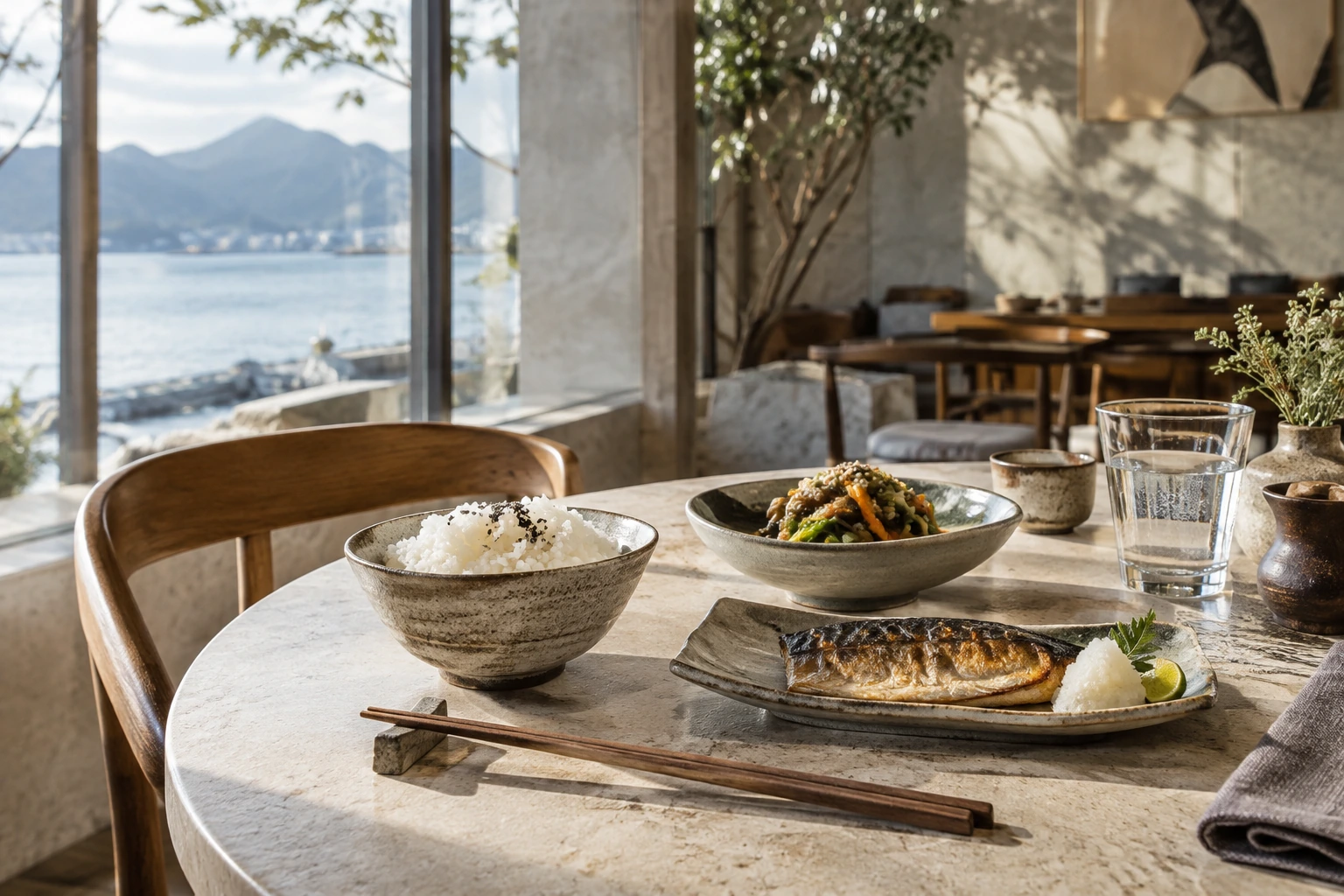
After work, you may not have energy to chop vegetables. Frozen vegetables or canned beans can be options. WHO 2026 includes frozen and canned produce without added sugars or excess sodium. The word “processed” alone is not a reason to reject everything.
Read storage and heating instructions and check whether seasoning is already included. Portionable frozen food and an opened can have different handling needs. Choose what fits your kitchen and the amount you can use. This is a preparation idea, not a recreation of a trial diet.
After work, you may not have energy to chop vegetables. Frozen vegetables or canned beans can be options. WHO 2026 includes frozen and canned produce without added sugars or excess sodium. The word “processed” alone is not a reason to reject everything.
Read storage and heating instructions and check whether seasoning is already included. Portionable frozen food and an opened can have different handling needs. Choose what fits your kitchen and the amount you can use. This is a preparation idea, not a recreation of a trial diet.
Sources: WHO, 2026
BAC Special 03 · Editorial draft13
What an ultraprocessed-
food trial compared
The ultraprocessed-food trial
Hall 2019 studied 20 weight-stable adults in a hospital. Each person received an ultraprocessed and an unprocessed diet for 14 days each. Although presented nutrient composition was matched, freely eaten energy differed.
The ultraprocessed diet led to 508 kcal/day more intake on average, with a 106 kcal/day standard error. That error is neither an individual range nor a 95% confidence interval. This does not predict the effect of a single shop item or isolate every additive and form of processing.
Hall 2019 studied 20 weight-stable adults in a hospital. Each person received an ultraprocessed and an unprocessed diet for 14 days each. Although presented nutrient composition was matched, freely eaten energy differed.
The ultraprocessed diet led to 508 kcal/day more intake on average, with a 106 kcal/day standard error. That error is neither an individual range nor a 95% confidence interval. This does not predict the effect of a single shop item or isolate every additive and form of processing.
Sources: Hall et al., 2019
BAC Special 03 · Editorial draft14
Eight-week weight change,
with uncertainty
Eight-week change and uncertainty
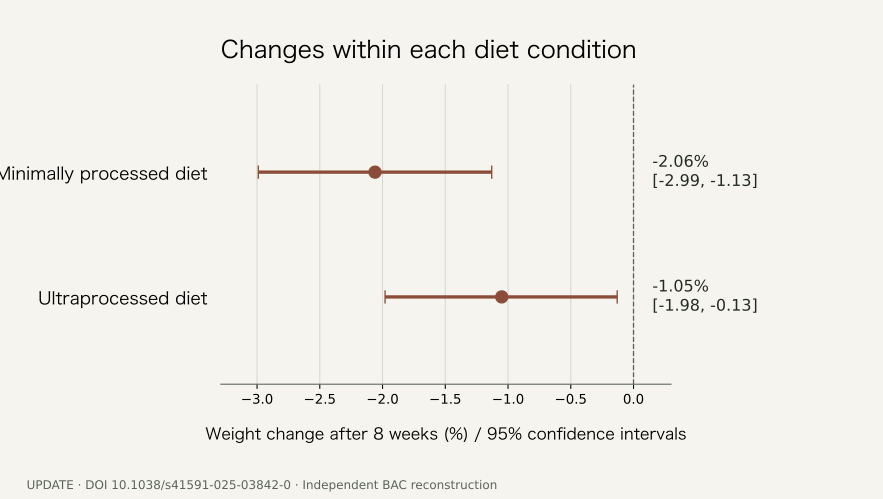
Dicken 2025 supplied two diets following UK dietary guidance for 8 weeks each. 55 people were randomized; 50 entered the analysis. Weight fell on both, with greater loss on the minimally processed diet.
These are model estimates for the study group. The difference is −1.01 percentage points, not an individual weight-loss forecast or the effect of swapping one food.
Dicken 2025 supplied two diets following UK dietary guidance for 8 weeks each. 55 people were randomized; 50 entered the analysis. Weight fell on both, with greater loss on the minimally processed diet.
These are model estimates for the study group. The difference is −1.01 percentage points, not an individual weight-loss forecast or the effect of swapping one food.
Minimally processed diet8 weeks
-2.06%-2.99 / -1.13
Ultraprocessed diet8 weeks
-1.05%-1.98 / -0.13
-3.0%-2.0%-1.0%0.0%
Data and standalone figure
Figure SVGView the values
| 8-week change | Estimate | 95% confidence interval |
|---|---|---|
| Minimally processed diet | −2.06% | −2.99 to −1.13% |
| Ultraprocessed diet | −1.05% | −1.98 to −0.13% |
| First minus second | −1.01 percentage points | −1.87 to −0.14 points |
ITT n=50; 55 randomized. Mixed-effects model. Intervals describe estimation uncertainty, not a range of individual responses. Figure independently reconstructed from the reported numbers. Original article: CC BY 4.0 (https://creativecommons.org/licenses/by/4.0/).
Sources: Dicken et al., 2025
BAC Special 03 · Editorial draft15
A trial diet and
your lunch differ
Trial conditions and daily lunch
Dicken 2025 enrolled adults with BMI 25 to below 40 and habitual ultraprocessed intake of at least half their energy. 50 of 55 were women. Free delivery of all food also differs from everyday shopping.
Diet order mattered, and carryover could not be excluded. Mild gastrointestinal symptoms occurred on both diets. Hutelin’s October 2026 study examines acute metabolism, not long-term weight loss. A recent publication still needs a check of what it measured.
Other diet characteristics also differed, so this does not isolate processing itself.
Dicken 2025 enrolled adults with BMI 25 to below 40 and habitual ultraprocessed intake of at least half their energy. 50 of 55 were women. Free delivery of all food also differs from everyday shopping.
Diet order mattered, and carryover could not be excluded. Mild gastrointestinal symptoms occurred on both diets. Hutelin’s October 2026 study examines acute metabolism, not long-term weight loss. A recent publication still needs a check of what it measured.
Other diet characteristics also differed, so this does not isolate processing itself.
January 2026 discussion articles about UPDATE were not retrieved. The new study was not read in full. These remain independent-review items before publication.
Sources: Dicken et al., 2025Hutelin et al., 2026
Read notes and sources
Think about the meal
before removing its staple
On a long workday, is removing bread or rice your only possible adjustment? WHO’s 2026 guidance describes adequacy, balance, moderation and diversity. Neither energy nor protein alone describes a whole diet.
If lunch was just a drink, check what food you can access later. Before adding another restriction, write down the current meal and the conditions of your workday. This issue does not assume every reader needs to lose weight.
Put protein
into the meal
Protein foods are one part of a meal. Options include fish, meat, eggs, tofu, beans and dairy, depending on what you can eat. Amounts vary with the product and preparation, so appearance does not establish adequacy.
The Nunes 2022 review of protein and resistance training was not a trial replacing complete diets with protein shakes. If your lunch lacks a main dish, consider where you could obtain one. First locate protein within the meal before deciding on any additional dose.
What the protein
research tested
Nunes 2022 combined 74 randomized trials in healthy non-obese adults. The 62 studies with resistance training found a small additional gain in lean body mass. Lean body mass is not a direct measurement of muscle alone.
Certainty varied by outcome. Effects on functional performance were very uncertain. These results do not establish improved work performance or a universal dose for people with illness. Distinguish the whole diet from the specific reason for adding protein.
Build a convenience-
store lunch
How can you assemble a meal from the foods available? These examples make the staple, main dish and side visible. They are editorial combinations, not endorsements of particular products or claims of equivalent nutrition.
Check before duplicating dishes already included. If cost is a barrier, reconsider the shop or purchasing time for another day. When an item is sold out, choose an alternative. An available combination is more concrete than an ideal menu you cannot obtain.
Illustrative combinations. No product nutrient values, portions or prices invented.
Fibre is found
beyond vegetables
When looking for fibre, do you always look for a salad? WHO 2026 advises obtaining carbohydrates from whole grains, vegetables, fruit and pulses. Fibre choices can also draw on that range.
If you always buy the same side dish, try another section once: bean dishes, whole-grain products or fruit. Where fibre is listed, compare the amount in the portion eaten. An absent fibre value does not mean zero; record it as unknown.
Frozen and canned
foods can be options
After work, you may not have energy to chop vegetables. Frozen vegetables or canned beans can be options. WHO 2026 includes frozen and canned produce without added sugars or excess sodium. The word “processed” alone is not a reason to reject everything.
Read storage and heating instructions and check whether seasoning is already included. Portionable frozen food and an opened can have different handling needs. Choose what fits your kitchen and the amount you can use. This is a preparation idea, not a recreation of a trial diet.
What an ultraprocessed-
food trial compared
Hall 2019 studied 20 weight-stable adults in a hospital. Each person received an ultraprocessed and an unprocessed diet for 14 days each. Although presented nutrient composition was matched, freely eaten energy differed.
The ultraprocessed diet led to 508 kcal/day more intake on average, with a 106 kcal/day standard error. That error is neither an individual range nor a 95% confidence interval. This does not predict the effect of a single shop item or isolate every additive and form of processing.
Eight-week weight change,
with uncertainty
Dicken 2025 supplied two diets following UK dietary guidance for 8 weeks each. 55 people were randomized; 50 entered the analysis. Weight fell on both, with greater loss on the minimally processed diet.
These are model estimates for the study group. The difference is −1.01 percentage points, not an individual weight-loss forecast or the effect of swapping one food.
ITT n=50; 55 randomized. Mixed-effects model. Intervals describe estimation uncertainty, not a range of individual responses. Figure independently reconstructed from the reported numbers. Original article: CC BY 4.0 (https://creativecommons.org/licenses/by/4.0/).
A trial diet and
your lunch differ
Dicken 2025 enrolled adults with BMI 25 to below 40 and habitual ultraprocessed intake of at least half their energy. 50 of 55 were women. Free delivery of all food also differs from everyday shopping.
Diet order mattered, and carryover could not be excluded. Mild gastrointestinal symptoms occurred on both diets. Hutelin’s October 2026 study examines acute metabolism, not long-term weight loss. A recent publication still needs a check of what it measured.
Other diet characteristics also differed, so this does not isolate processing itself.
January 2026 discussion articles about UPDATE were not retrieved. The new study was not read in full. These remain independent-review items before publication.
BAC Special 03 · Editorial draft16
On late-work days,
choose the buying time
Food at work and away
You intended to buy dinner after work, but the shop closes first. If this is predictable, options include buying at lunch, finding a workplace option or keeping usable food at home. Put the purchase time into your plans as well as the meal.
BAC’s suggestion is to expand one available condition for tomorrow’s meal. Check refrigeration, transport and breaks first. Being able to eat is a practical result; it is not evidence that weight or glucose improved. Start with a workable way to obtain dinner.
You intended to buy dinner after work, but the shop closes first. If this is predictable, options include buying at lunch, finding a workplace option or keeping usable food at home. Put the purchase time into your plans as well as the meal.
BAC’s suggestion is to expand one available condition for tomorrow’s meal. Check refrigeration, transport and breaks first. Being able to eat is a practical result; it is not evidence that weight or glucose improved. Start with a workable way to obtain dinner.
Sources: MHLW
BAC Special 03 · Editorial draft17
Late-dinner evidence
is not a universal clock
Conditions of the late-dinner trial
Gu 2020 compared 18:00 and 22:00 dinners in 20 healthy adults, with sleep fixed at 23:00–07:00. This was a short laboratory crossover. Nocturnal glucose and dietary fat oxidation differed after the later dinner.
The trial did not identify a harmful clock-time boundary for everyone or measure long-term weight gain. On a late-work day, look for an eating break and purchasing opportunity. Whether to split dinner or prepare it at home depends on your circumstances, not a rule derived from this experiment.
Gu 2020 compared 18:00 and 22:00 dinners in 20 healthy adults, with sleep fixed at 23:00–07:00. This was a short laboratory crossover. Nocturnal glucose and dietary fat oxidation differed after the later dinner.
The trial did not identify a harmful clock-time boundary for everyone or measure long-term weight gain. On a late-work day, look for an eating break and purchasing opportunity. Whether to split dinner or prepare it at home depends on your circumstances, not a rule derived from this experiment.
Sources: Gu et al., 2020
BAC Special 03 · Editorial draft18
When an evening meeting overruns
When the meeting overruns
This is a fictional workday. It maps opportunities to obtain food, not evidence that splitting dinner is medically superior.
This is a fictional workday. It maps opportunities to obtain food, not evidence that splitting dinner is medically superior.
If a break is available, decide whether to eat
Review what you already ate before adding food
Change one problem with access or storage
Lunch break
Check the evening schedule and food access
Before the meeting
If a break is available, decide whether to eat
After the meeting
Review what you already ate before adding food
Next day
Change one problem with access or storage
Sources: MHLW
BAC Special 03 · Editorial draft19
Build breakfast around soup
Look inside and outside the bowl
Can a warm soup be your breakfast? BAC-0078 contributes the question of what is inside the bowl and what accompanies it. Rice on the side, noodles inside, tofu or eggs can have different roles in the meal.
Packaged soups may be labelled per sachet or per prepared amount. Added ingredients are not included in the original numbers. Follow heating and storage instructions. Warmth alone is not evidence that soup is superior to other breakfasts.
Can a warm soup be your breakfast? BAC-0078 contributes the question of what is inside the bowl and what accompanies it. Rice on the side, noodles inside, tofu or eggs can have different roles in the meal.
Packaged soups may be labelled per sachet or per prepared amount. Added ingredients are not included in the original numbers. Follow heating and storage instructions. Warmth alone is not evidence that soup is superior to other breakfasts.
Sources: Consumer Affairs AgencyWHO, 2026
BAC Special 03 · Editorial draft20
Read a restaurant menu
by its components
Start with visible meal components
You do not need invented nutrient numbers when a restaurant provides none. Check the visible components first. This table offers questions, not a ranking of dishes.
You do not need invented nutrient numbers when a restaurant provides none. Check the visible components first. This table offers questions, not a ranking of dishes.
| Meal | What to check | If you have a choice |
|---|---|---|
| Set meal | Staple, main and sides; amounts | Decide on added sauce or soup |
| Rice bowl | Toppings and vegetable dishes | Consider a side if needed |
| Noodles | Toppings, broth and portion | Check toppings or a side |
| Course menu | Upcoming dishes and drinks | Check before ordering extras |
Sources: WHO, 2026
BAC Special 03 · Editorial draft21
Count salt across
meal additions
Count salt in meal additions
For soup or sauce additions, check each salt-equivalent value. Japan’s 2025 general adult targets are below 7.5 g/day for men and 6.5 g/day for women. They are not pass marks for a single food.
For soup or sauce additions, check each salt-equivalent value. Japan’s 2025 general adult targets are below 7.5 g/day for men and 6.5 g/day for women. They are not pass marks for a single food.
Meal or lunch box
Check the value for your portion
Soup and drinks
Include values where provided
Separate sauce
Check whether already included
Repeated combination
Review the meal you often choose
- Main
Meal or lunch box
Check the value for your portion
- Added
Soup and drinks
Include values where provided
- Seasoning
Separate sauce
Check whether already included
- Usual
Repeated combination
Review the meal you often choose
General targets. Check disease-specific salt instructions with your clinician. Do not guess unlisted restaurant values.
Sources: MHLWConsumer Affairs Agency
BAC Special 03 · Editorial draft22
Keep dinner
as an eating occasion
Check the dinner and its timing
Are you planning to skip lunch to compensate for a business dinner? Adding rules before reviewing what you ate can make changes harder to understand. Check the venue, start time and whether food will be served.
If the event looks mostly like drinks, check food options too. For shared dishes, record what you took as far as you remember; you do not need to guess grams. This is an editorial way to organise conditions, not a diagnosis of habitual nutrient deficiency from one dinner.
Are you planning to skip lunch to compensate for a business dinner? Adding rules before reviewing what you ate can make changes harder to understand. Check the venue, start time and whether food will be served.
If the event looks mostly like drinks, check food options too. For shared dishes, record what you took as far as you remember; you do not need to guess grams. This is an editorial way to organise conditions, not a diagnosis of habitual nutrient deficiency from one dinner.
Sources: MHLW
BAC Special 03 · Editorial draft23
Alcohol amount
is more than glass count
Read volume and alcohol strength
Equal glass counts can contain different amounts of alcohol. Japan’s 2024 guidance uses volume in ml × ABV / 100 × 0.8. A 500 ml beer at 5% contains 20 g pure alcohol. This is its conversion example, not a safe-dose recommendation.
The daily thresholds of at least 40 g for men and 20 g for women identify drinking levels associated with higher noncommunicable disease risk; they are not individual allowances. At dinner, you can choose not to drink, set an amount before ordering or select alcohol-free drinks. Food and water do not erase alcohol-related risks.
Equal glass counts can contain different amounts of alcohol. Japan’s 2024 guidance uses volume in ml × ABV / 100 × 0.8. A 500 ml beer at 5% contains 20 g pure alcohol. This is its conversion example, not a safe-dose recommendation.
The daily thresholds of at least 40 g for men and 20 g for women identify drinking levels associated with higher noncommunicable disease risk; they are not individual allowances. At dinner, you can choose not to drink, set an amount before ordering or select alcohol-free drinks. Food and water do not erase alcohol-related risks.
Sources: MHLW, 2024
BAC Special 03 · Editorial draft24
Choices at a business dinner
Keep the option not to drink
Consider amount, health and travel plans together. Not pressuring a non-drinker is also consistent with the Japanese guidance.
Do not drink during pregnancy or breastfeeding, or when driving. In Japan, drinking under age 20 is prohibited.
Consider amount, health and travel plans together. Not pressuring a non-drinker is also consistent with the Japanese guidance.
Do not drink during pregnancy or breastfeeding, or when driving. In Japan, drinking under age 20 is prohibited.
| Situation | A choice to make first |
|---|---|
| Before attending | Whether to drink; how to get home |
| Before ordering | Volume, ABV and alcohol-free options |
| At the table | Have food; do not pressure others |
| Health condition or medicines | Check suitability with a clinician or pharmacist |
Food, water and switching drinks are not a guarantee that drinking is harmless.
Sources: MHLW, 2024
Read notes and sources
On late-work days,
choose the buying time
You intended to buy dinner after work, but the shop closes first. If this is predictable, options include buying at lunch, finding a workplace option or keeping usable food at home. Put the purchase time into your plans as well as the meal.
BAC’s suggestion is to expand one available condition for tomorrow’s meal. Check refrigeration, transport and breaks first. Being able to eat is a practical result; it is not evidence that weight or glucose improved. Start with a workable way to obtain dinner.
Late-dinner evidence
is not a universal clock
Gu 2020 compared 18:00 and 22:00 dinners in 20 healthy adults, with sleep fixed at 23:00–07:00. This was a short laboratory crossover. Nocturnal glucose and dietary fat oxidation differed after the later dinner.
The trial did not identify a harmful clock-time boundary for everyone or measure long-term weight gain. On a late-work day, look for an eating break and purchasing opportunity. Whether to split dinner or prepare it at home depends on your circumstances, not a rule derived from this experiment.
When an evening meeting overruns
This is a fictional workday. It maps opportunities to obtain food, not evidence that splitting dinner is medically superior.
Build breakfast around soup
Can a warm soup be your breakfast? BAC-0078 contributes the question of what is inside the bowl and what accompanies it. Rice on the side, noodles inside, tofu or eggs can have different roles in the meal.
Packaged soups may be labelled per sachet or per prepared amount. Added ingredients are not included in the original numbers. Follow heating and storage instructions. Warmth alone is not evidence that soup is superior to other breakfasts.
Read a restaurant menu
by its components
You do not need invented nutrient numbers when a restaurant provides none. Check the visible components first. This table offers questions, not a ranking of dishes.
Count salt across
meal additions
For soup or sauce additions, check each salt-equivalent value. Japan’s 2025 general adult targets are below 7.5 g/day for men and 6.5 g/day for women. They are not pass marks for a single food.
General targets. Check disease-specific salt instructions with your clinician. Do not guess unlisted restaurant values.
Keep dinner
as an eating occasion
Are you planning to skip lunch to compensate for a business dinner? Adding rules before reviewing what you ate can make changes harder to understand. Check the venue, start time and whether food will be served.
If the event looks mostly like drinks, check food options too. For shared dishes, record what you took as far as you remember; you do not need to guess grams. This is an editorial way to organise conditions, not a diagnosis of habitual nutrient deficiency from one dinner.
Alcohol amount
is more than glass count
Equal glass counts can contain different amounts of alcohol. Japan’s 2024 guidance uses volume in ml × ABV / 100 × 0.8. A 500 ml beer at 5% contains 20 g pure alcohol. This is its conversion example, not a safe-dose recommendation.
The daily thresholds of at least 40 g for men and 20 g for women identify drinking levels associated with higher noncommunicable disease risk; they are not individual allowances. At dinner, you can choose not to drink, set an amount before ordering or select alcohol-free drinks. Food and water do not erase alcohol-related risks.
Choices at a business dinner
Consider amount, health and travel plans together. Not pressuring a non-drinker is also consistent with the Japanese guidance.
Do not drink during pregnancy or breastfeeding, or when driving. In Japan, drinking under age 20 is prohibited.
Food, water and switching drinks are not a guarantee that drinking is harmless.
BAC Special 03 · Editorial draft25
When your circumstances differ
Your circumstances and sources
This issue helps working adults organise food choices. If you have protein or salt instructions for kidney disease or another condition, do not replace them with general magazine advice. Japan’s reference intakes also direct disease treatment to relevant nutrition-management guidance.
If poor appetite, unintentional weight loss or difficulty eating persists, seek advice before adding restrictions or supplements. Include your circumstances: allergies, pregnancy, medicines and workplace barriers to eating. That gives the conversation a concrete starting point.
This issue helps working adults organise food choices. If you have protein or salt instructions for kidney disease or another condition, do not replace them with general magazine advice. Japan’s reference intakes also direct disease treatment to relevant nutrition-management guidance.
If poor appetite, unintentional weight loss or difficulty eating persists, seek advice before adding restrictions or supplements. Include your circumstances: allergies, pregnancy, medicines and workplace barriers to eating. That gives the conversation a concrete starting point.
Sources: MHLW
BAC Special 03 · Editorial draft26
If adding a supplement,
what will it supply?
What will the supplement supply?
Can one supplement restore a week of uneven meals? NIH guidance explains that multivitamin/mineral products cannot replace a variety of foods. Food provides more than vitamins and minerals.
That does not rule out appropriate supplementation. Check what you intend to add, how much and when. Consider overlapping products or fortified foods and medication interactions. Bring the product name and amount to a discussion about whether it is needed.
Can one supplement restore a week of uneven meals? NIH guidance explains that multivitamin/mineral products cannot replace a variety of foods. Food provides more than vitamins and minerals.
That does not rule out appropriate supplementation. Check what you intend to add, how much and when. Consider overlapping products or fortified foods and medication interactions. Bring the product name and amount to a discussion about whether it is needed.
Sources: NIH ODS, 2024
BAC Special 03 · Editorial draft27
Travel meals start
with available facilities
Travel meals start with facilities
You expected a refrigerator at the hotel, but you have not confirmed it is available. Or you cannot find an early-opening shop. Check the accommodation and travel conditions before trying to recreate your usual meals: breakfast hours, nearby food and storage rules.
BAC suggests one arrival meal and a fallback if you cannot buy it. Do not assume food can be safely stored when facilities are unknown. Include whether you will eat at the station or after arrival. This gives the trip a concrete food plan.
You expected a refrigerator at the hotel, but you have not confirmed it is available. Or you cannot find an early-opening shop. Check the accommodation and travel conditions before trying to recreate your usual meals: breakfast hours, nearby food and storage rules.
BAC suggests one arrival meal and a fallback if you cannot buy it. Do not assume food can be safely stored when facilities are unknown. Include whether you will eat at the station or after arrival. This gives the trip a concrete food plan.
Can buy
Check opening hours and a place to eat
Can carry
Match food storage needs to facilities
Plans change
Identify another meal at the destination
Can buy
Check opening hours and a place to eat
Can carry
Match food storage needs to facilities
Plans change
Identify another meal at the destination
Sources: MHLW
BAC Special 03 · Editorial draft28
Check one thing
on the next workday
Check one thing next workday
Has “improving food” become only a plan to reduce numbers? Choose one situation: match lunch-label units, buy dinner before overtime or decide a drink before the event.
Record cost, preparation and access as well as whether it worked. One record cannot determine nutritional adequacy or medical benefit. If the idea is hard to repeat, the shop or break conditions may be worth changing. A useful record leaves a question for the next meal.
Has “improving food” become only a plan to reduce numbers? Choose one situation: match lunch-label units, buy dinner before overtime or decide a drink before the event.
Record cost, preparation and access as well as whether it worked. One record cannot determine nutritional adequacy or medical benefit. If the idea is hard to repeat, the shop or break conditions may be worth changing. A useful record leaves a question for the next meal.
- Situation
- What to check at the next meal
- Choice
- What you bought and ate
- Conditions
- Time, shop, storage, cost and breaks
- Next time
- One condition to change
Sources: MHLW
Read notes and sources
When your circumstances differ
This issue helps working adults organise food choices. If you have protein or salt instructions for kidney disease or another condition, do not replace them with general magazine advice. Japan’s reference intakes also direct disease treatment to relevant nutrition-management guidance.
If poor appetite, unintentional weight loss or difficulty eating persists, seek advice before adding restrictions or supplements. Include your circumstances: allergies, pregnancy, medicines and workplace barriers to eating. That gives the conversation a concrete starting point.
If adding a supplement,
what will it supply?
Can one supplement restore a week of uneven meals? NIH guidance explains that multivitamin/mineral products cannot replace a variety of foods. Food provides more than vitamins and minerals.
That does not rule out appropriate supplementation. Check what you intend to add, how much and when. Consider overlapping products or fortified foods and medication interactions. Bring the product name and amount to a discussion about whether it is needed.
Travel meals start
with available facilities
You expected a refrigerator at the hotel, but you have not confirmed it is available. Or you cannot find an early-opening shop. Check the accommodation and travel conditions before trying to recreate your usual meals: breakfast hours, nearby food and storage rules.
BAC suggests one arrival meal and a fallback if you cannot buy it. Do not assume food can be safely stored when facilities are unknown. Include whether you will eat at the station or after arrival. This gives the trip a concrete food plan.
Check one thing
on the next workday
Has “improving food” become only a plan to reduce numbers? Choose one situation: match lunch-label units, buy dinner before overtime or decide a drink before the event.
Record cost, preparation and access as well as whether it worked. One record cannot determine nutritional adequacy or medical benefit. If the idea is hard to repeat, the shop or break conditions may be worth changing. A useful record leaves a question for the next meal.
BAC Special 03 · Editorial draft29
Sources and reading scope 1
References
Government guidance is different from an effect estimate from one trial. Here it informs general food choices, not treatment or pass marks for products.
LABEL covers label units; DRI habitual intake and scope; SALT general adult targets; WHO food variety; PROTEIN healthy-adult training research. Each source entry states what was checked and what remains unread.
- Consumer Affairs Agency. Using nutrition labelsOfficial four-sheet PDF downloaded. Label units, combining foods and conversion examples on PDF sheets 1–3 checked. Older requirement tables not used. Consumer guidance, not an efficacy trial.
- MHLW. Dietary Reference Intakes for Japanese 2025: General introductionOfficial PDF downloaded. Printed p 1 population scope and disease-specific nutrition guidance, and p 7 habitual-intake concept checked. Other sections and nutrient chapters not fully read. Government reference intakes.
- MHLW. Dietary Reference Intakes for Japanese 2025: MacromineralsOfficial PDF downloaded. Sodium section, printed pp 247–249, targets and Table 1 checked; p 248 inspected as an image. General adult salt targets: men below 7.5 g/day, women below 6.5 g/day. Other minerals not fully read.
- WHO, 2026. Healthy diet26 January 2026 version. Overview, four principles, Carbohydrates and Sugars checked. At least 25 g/day naturally occurring fibre is guidance for people older than 10. This fact sheet does not show individual GRADE recommendation strengths.
- Nunes et al., 2022. Protein intake, lean body mass and functionPubMed metadata and publisher abstract, methods, lean-body-mass and functional results, discussion and interests checked. 74 RCTs in healthy non-obese adults; resistance-training LBM analysis: 62 studies, SMD 0.22, 95% CI 0.14–0.30, moderate certainty. Supplements not fully read. ILSI Europe involvement, nutrition-industry affiliations and author financial relationships disclosed.
BAC Special 03 · Editorial draft30
Sources and reading scope 2
References
HALL and UPDATE are trials providing whole diets. LATE is a short laboratory trial. NEW26 examines acute metabolism and imaging. These outcomes are not added together into one generic “health effect.”
ALCOHOL and SUPP are public guidance. Checked on 11 October 2026. Searches were focused on this issue’s questions, not a systematic review. Unread full-text sections, supplements, interests and the 2026 UPDATE discussion papers are identified source by source.
- Hall et al., 2019. Ultra-processed diets and ad libitum energy intakePMC author manuscript summary, design, food intake, Figure 2, limitations, NIH funding and interests checked. 20 weight-stable adults, 14 days per diet, inpatient crossover. Difference 508±106 kcal/day;±denotes SEM, not 95% CI. No CI invented or back-calculated. CG Forde disclosed nutrition-industry relationships. Full supplemental menus not checked.
- Dicken et al., 2025. Healthy-guideline MPF versus UPF dietsCurrent publisher abstract, participant flow, primary outcome, Fig 2 legend, safety, limitations, methods, funding and interests checked. 55 randomized, 50 ITT, 43 completed both periods; 8 weeks per diet; 50/55 women. Order effect and possible carryover. January 2026 Matters Arising links present; retrieval failed and arguments not evaluated. All 27 supplemental tables not read. UPF book royalties and pharmaceutical/nutrition-related relationships disclosed.
- Gu et al., 2020. Metabolic effects of late dinnerPubMed and publisher abstract, design and relevant results checked. 20 healthy adults; 18:00 versus 22:00 dinner; 23:00–07:00 sleep; short laboratory crossover. No prediction of long-term weight or disease from nocturnal glucose/fat oxidation. Full text, supplements, funding and interests not fully checked.
- MHLW, 2024. Guidelines on drinking with consideration for healthFinal official 2024 PDF, printed pp 1–6 checked. Formula p 3; not-an-individual-allowance note p 4; drinking practices, contraindications and medicines pp 4–6. Mainly adults 20+without underlying disease. No GRADE recommendation strengths shown. All cited studies not checked.
- NIH ODS, 2024. Multivitamin/mineral Supplements: Consumer15 February 2024 version. Food substitution, nutrient excess, medication interactions and healthful-eating sections checked. US public guidance; not a product endorsement or verification of Japanese regulatory compliance.
- Hutelin et al., 2026. Metabolic and neural responses to ultraprocessed foodsPublished 5 October 2026. Publisher search extracts for abstract, Methods overview and participant inclusion checked. 57 enrolled, 32 metabolic sessions, 29 metabolic–fMRI association analyses. Acute study. Direct full-text retrieval failed; all tables, supplements and interests unchecked. Not evidence of long-term disease, addiction or an individual diagnosis.
BAC Special 03 · Editorial draft31
Editorial record
Editorial information
BAC MONTHLY 03: Eating well, away from home.
Paired Japanese and English editorial drafts. 11 October 2026.
Five existing manuscripts were read and re-edited. Primary sources were checked and added. Fictional workdays and food combinations are identified as editorial examples. No product-label numbers, individual effects or clinical anecdotes were invented.
Independent medical and Japanese–English review has been carried out. Final human clinical and editorial approval and commercial-use checks remain pending. This is not a published or sale-ready product, and it does not imply completion of other issues.
BAC Special 03 · Editorial draft32